02
Identity and lineage
A classic trade line sometimes called Inca Stargazer. The geographic story is not independently verified.
That distinction matters because “strain” is an informal marketplace term here, not a registered genetic identity. Names may be copied, relabeled, or applied to selections that have drifted. A label is best read as a clue about a seller’s intended lineage, not proof of what is in front of you.
What it is reported to look like
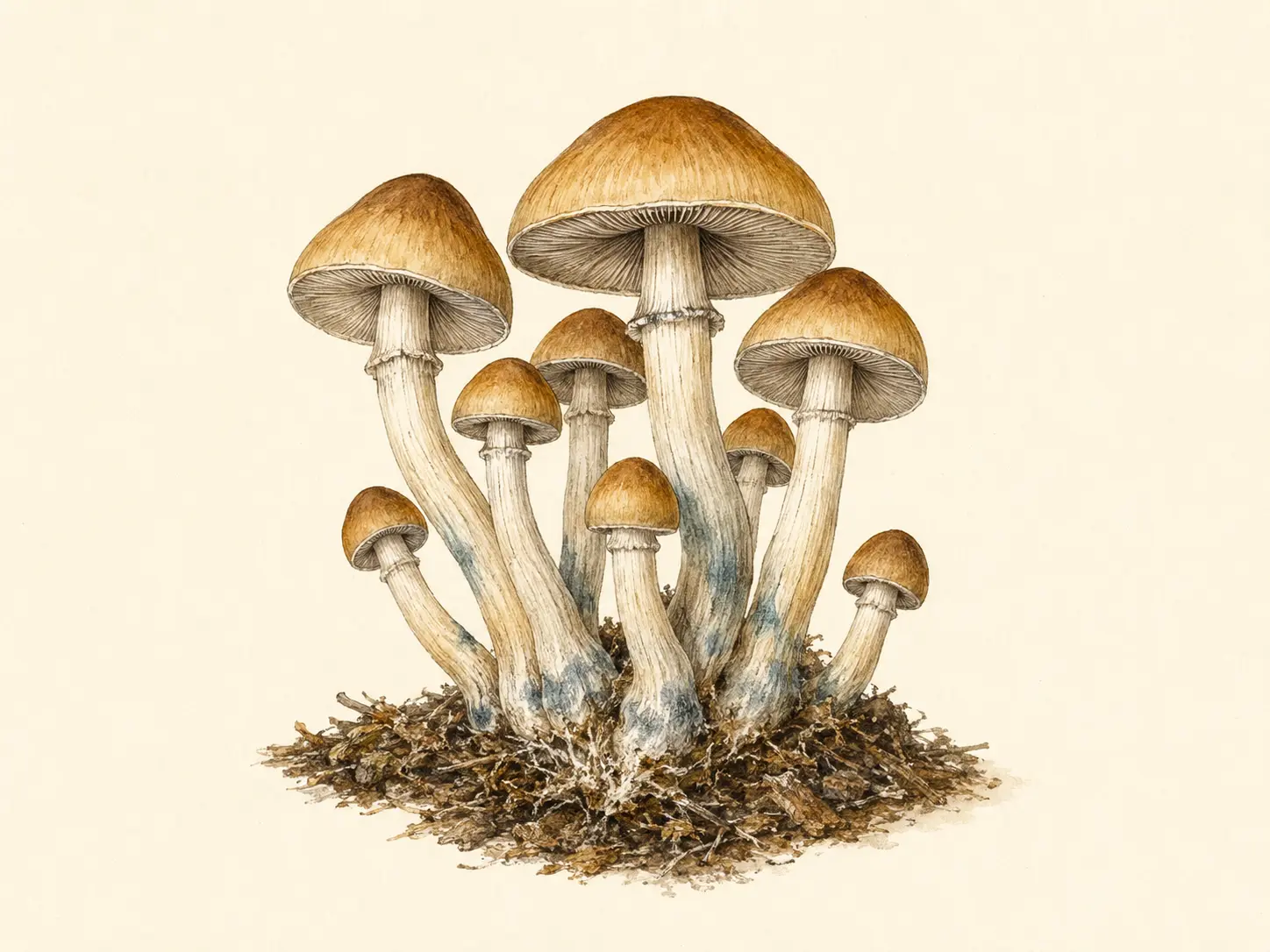
A conventional cubensis form with brown-gold caps and pale stems. Visual traits are not reliable identification tools. Growing conditions can change shape and color, while unrelated lines can look similar. Never use appearance alone to decide species, dose, or safety.
03
What the experience is reported to be like
Stargazer is often described as bright or open, within ordinary cubensis variability. These descriptions come from community reports and should be treated as anecdotes, not a promised emotional or visual profile.
Across psilocybin mushrooms, people may experience sensory changes, altered time, emotional amplification, nausea, anxiety, confusion, or a loss of ordinary self-boundaries. Expectancy can steer how someone describes a named line. The same material can feel very different on another day or to another person.
Set and setting are not decorative ideas. Sleep, current stress, mental health, physical environment, trusted support, music, dose, medications, and other substances can shape the experience and its risks. A pleasant reputation cannot overcome an unsafe context.
04
Potency and conservative dose context
Relative reputation only. Potency can vary between batches and among individual mushrooms from the same batch.
This line is usually placed in the conventional cubensis range. No strain name supplies a safe multiplier, and a precise gram amount cannot predict intensity.
| Experience | Low-end reference | Why this is cautious |
|---|---|---|
| First experience | 0.5–0.75 g dried | A conservative low-range reference with a sober support person and no mixing. |
| Some experience | 0.5–1 g dried | Use the low end when the batch is unfamiliar. |
| Experienced | 1–2 g dried | A moderate reference; stronger is not inherently better or safer. |
05
How Stargazer compares
Reference strain
Golden Teacher
Commonly described as balanced and reflective rather than unusually forceful. Its label carries a similar relative potency reputation than Stargazer.
View profile →Reference strain
Cambodian
Often described as quick, clear, and energetic rather than heavily sedating. Its label carries a similar relative potency reputation than Stargazer.
View profile →Comparisons are broad editorial shorthand. They cannot tell you whether one specific sample is stronger than another without chemical analysis.
06
Safety notes that matter more than the strain
Psilocybin can produce panic, confusion, nausea, increased heart rate and blood pressure, impaired judgment, and, less commonly, prolonged psychiatric symptoms. It is not considered safe for people with psychotic conditions or severe bipolar disorder. Pregnancy and breastfeeding safety are unknown.
Do not mix substances, drive, cycle, operate machinery, supervise children, or go near traffic, heights, open water, weapons, or fire while impaired. A sober, trusted support person should understand consent, boundaries, relevant health information, and the emergency plan.
FAQ
Common questions
How strong is Stargazer?+
Stargazer has a middle-range relative reputation. That is not a lab result; batches and individual mushrooms can vary substantially.
Is Stargazer good for a first experience?+
No strain is automatically beginner-safe. This line has a conventional potency reputation, but health history, medication, a sober support person, setting, and a cautious amount matter more than the name.
Does Stargazer cause unique effects?+
People often describe it as often described as bright or open, within ordinary cubensis variability. Those reports are anecdotal. Dose, expectancy, chemistry, environment, and the individual can outweigh the trade name.
Can you identify Stargazer by appearance?+
Not reliably. A conventional cubensis form with brown-gold caps and pale stems. Appearance overlaps across cultivated lines, and a photo cannot establish chemistry, purity, or safety.
Sources