02
What reishi is
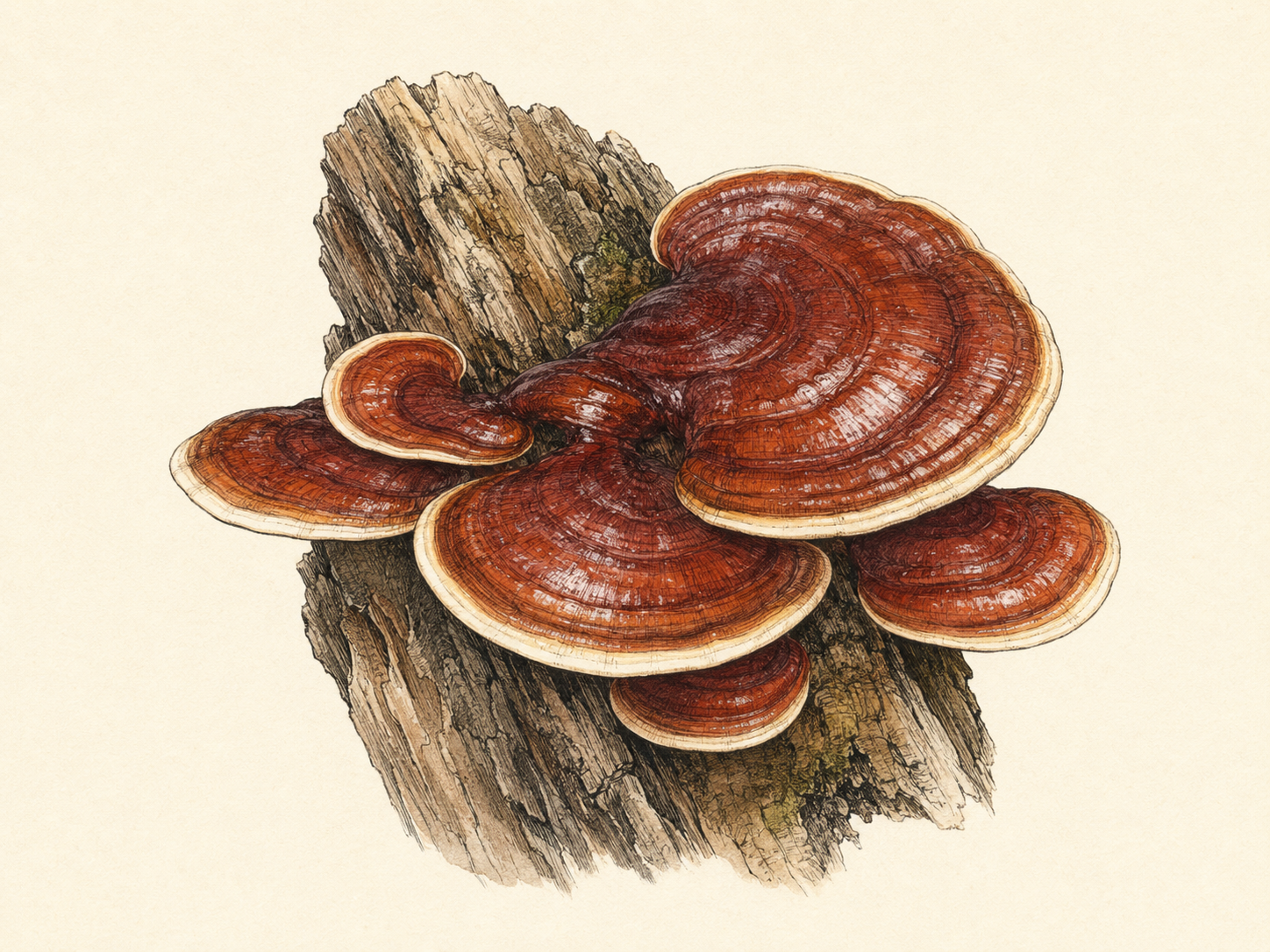
The word reishi can refer to more than one Ganoderma species. East Asian commercial material is often G. lingzhi, while labels may use the older or broader name G. lucidum. Precise species identification is a quality signal.
“Functional mushroom” is a wellness category, not a regulatory standard. A product can use the phrase without proving identity, composition, safety, or benefit. Start with the Latin name and the actual material, not the promise on the front.
03
What the research suggests
Human evidence: mixedHuman studies use different species, extracts, and endpoints, which makes broad conclusions difficult. Evidence does not support presenting reishi as a general immune booster or disease treatment.
Beta-glucans and triterpenes are the main compound groups discussed. Water extraction favors polysaccharides, while alcohol can extract more triterpenes; a dual extract aims to include both.
A supplement’s front-label mushroom count does not show that it contains a meaningful amount of either compound group.
04
How people take it and dosage context
Capsules, powders, teas, and tinctures vary substantially. There is no universal consumer dose. Use the product-specific serving, avoid combining overlapping extracts, and discuss use with a clinician if you take medication.
| Format | What to check | Limit |
|---|---|---|
| Whole powder | Species, mushroom part, serving, starch and beta-glucans | Less concentrated; composition still varies. |
| Extract | Solvent, ratio, final beta-glucans or marker compounds | An extract ratio alone does not show quality. |
| Tincture | Species, solvent, concentration, serving | Alcohol and water capture different compounds; drops are not standardized. |
| Blend | Amount of every species | A large blend can hide very small individual amounts. |
05
Side effects and who should be cautious
Reported effects include nausea, digestive upset, dry mouth, dizziness, or insomnia. Reishi may be inappropriate with anticoagulants, antiplatelet drugs, immunosuppressants, or before surgery. Rare liver-injury reports make unexplained dark urine, jaundice, or severe fatigue reasons to stop and seek care.
Dietary supplements are not reviewed like prescription drugs before sale. “Natural” does not mean interaction-free. Bring the label and, if available, a current certificate of analysis when asking a clinician or pharmacist.
06
What to look for when buying
- Exact Ganoderma species is listed
- Beta-glucans and, ideally, triterpenes are quantified
- The extraction method matches the label claim
- Independent contaminant testing is current
- A vague proprietary blend is avoided
Fruiting body vs. mycelium
Neither phrase wins automatically. They are different fungal materials with different compound profiles. A trustworthy company says what it used, whether grain or another substrate remains, how it extracted the material, and what the finished batch tested for.
Beta-glucans and testing
Measured beta-glucans are more useful than a broad total-polysaccharide claim, which may include starch. Look for a recent, lot-linked report covering identity, heavy metals, microbes, and relevant pesticides or adulterants.
FAQ
Common questions
Is reishi a sedative?+
Some people use it at night, but it is not a reliably established sleep medicine and some report insomnia instead.
What does dual extract mean?+
It generally means the material has been extracted with both water and alcohol to capture different compound groups. The phrase is useful only when the company also discloses the extract and testing details.
Can reishi be taken every day?+
Long-term safety depends on the preparation, dose, health history, and medications. There is no one daily schedule supported for every consumer product.
Sources