02
What cordyceps is
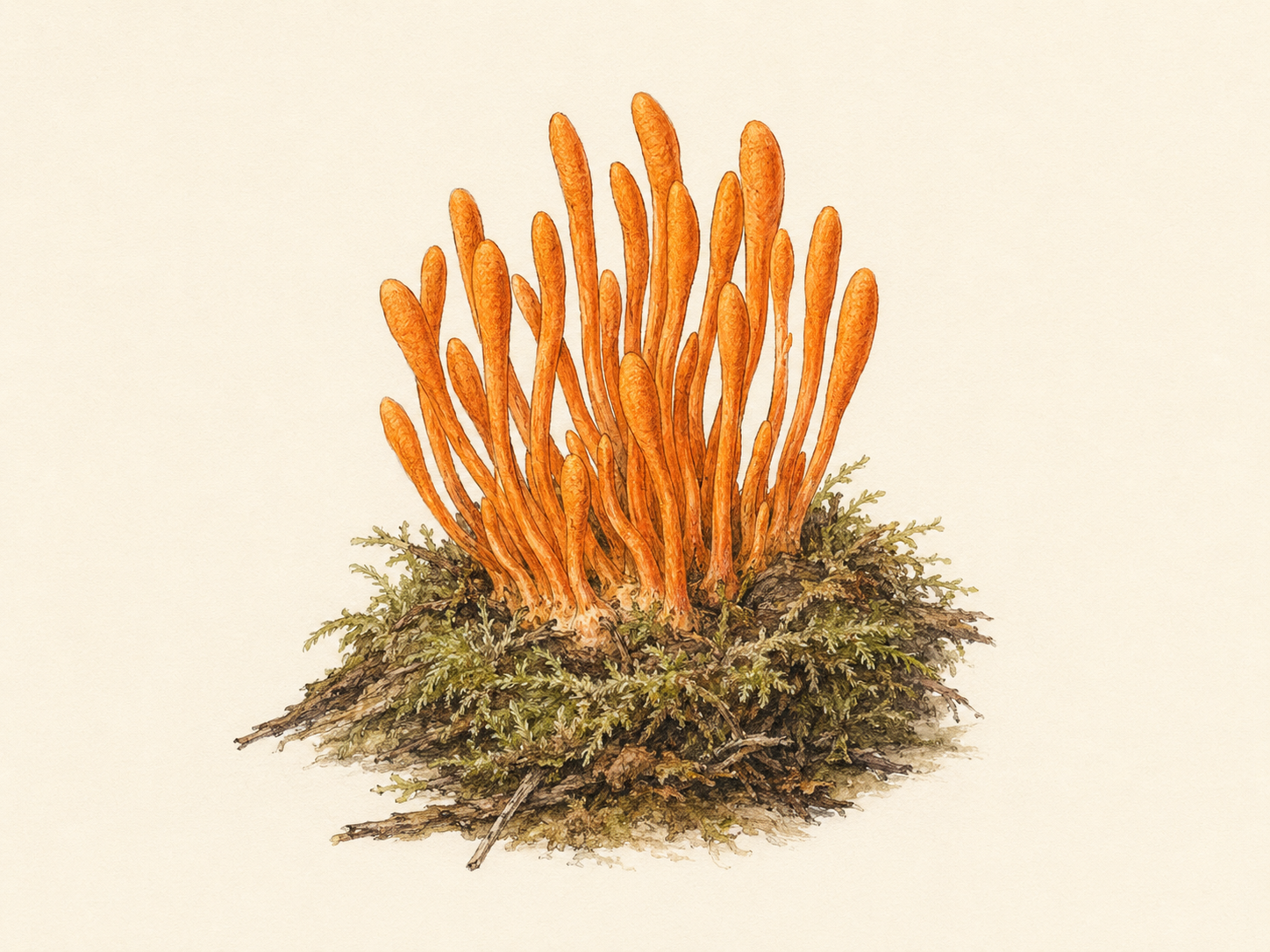
Cordyceps is a market category as much as a single ingredient. C. militaris can be cultivated and may contain cordycepin. Products labeled simply ‘cordyceps’ leave an important identity question unanswered.
“Functional mushroom” is a wellness category, not a regulatory standard. A product can use the phrase without proving identity, composition, safety, or benefit. Start with the Latin name and the actual material, not the promise on the front.
03
What the research suggests
Human evidence: mixedA handful of small exercise studies have reported possible changes in oxygen use or fatigue measures, while others have found little or no meaningful effect.
Different species, cultivated materials, extracts, and participant groups limit comparison. Results from a standardized research extract cannot be assumed for an ordinary powder.
Claims about testosterone, athletic transformation, or treating fatigue disorders exceed the evidence.
04
How people take it and dosage context
Common formats include cultivated fruiting-body powder and extracts. There is no established universal clinical dose. Start with the label serving only after checking species, extract, and interactions.
| Format | What to check | Limit |
|---|---|---|
| Whole powder | Species, mushroom part, serving, starch and beta-glucans | Less concentrated; composition still varies. |
| Extract | Solvent, ratio, final beta-glucans or marker compounds | An extract ratio alone does not show quality. |
| Tincture | Species, solvent, concentration, serving | Alcohol and water capture different compounds; drops are not standardized. |
| Blend | Amount of every species | A large blend can hide very small individual amounts. |
05
Side effects and who should be cautious
Cordyceps may interact with anticoagulant, glucose-lowering, or immune-modifying medication. Digestive upset and allergy are possible. People with autoimmune conditions, bleeding disorders, pregnancy, or upcoming surgery should get individualized medical guidance.
Dietary supplements are not reviewed like prescription drugs before sale. “Natural” does not mean interaction-free. Bring the label and, if available, a current certificate of analysis when asking a clinician or pharmacist.
06
What to look for when buying
- The exact species is named
- Cultivated source and mushroom part are disclosed
- Cordycepin or relevant marker testing is explained
- The serving is not hidden in a blend
- Heavy-metal, microbe, and identity tests are available
Fruiting body vs. mycelium
Neither phrase wins automatically. They are different fungal materials with different compound profiles. A trustworthy company says what it used, whether grain or another substrate remains, how it extracted the material, and what the finished batch tested for.
Beta-glucans and testing
Measured beta-glucans are more useful than a broad total-polysaccharide claim, which may include starch. Look for a recent, lot-linked report covering identity, heavy metals, microbes, and relevant pesticides or adulterants.
FAQ
Common questions
Is commercial cordyceps taken from insects?+
Most mainstream C. militaris supplements are cultivated on a controlled substrate. Labels should state the species and production method.
Does cordyceps contain caffeine?+
The mushroom itself is not a caffeine source, but blended energy products may add tea, coffee, or isolated caffeine.
Is wild Ophiocordyceps sinensis better?+
There is no simple evidence-based reason to prefer a scarce, expensive wild ingredient. Identity, standardization, contaminants, and sustainability are major concerns.
Sources