02
What chaga is
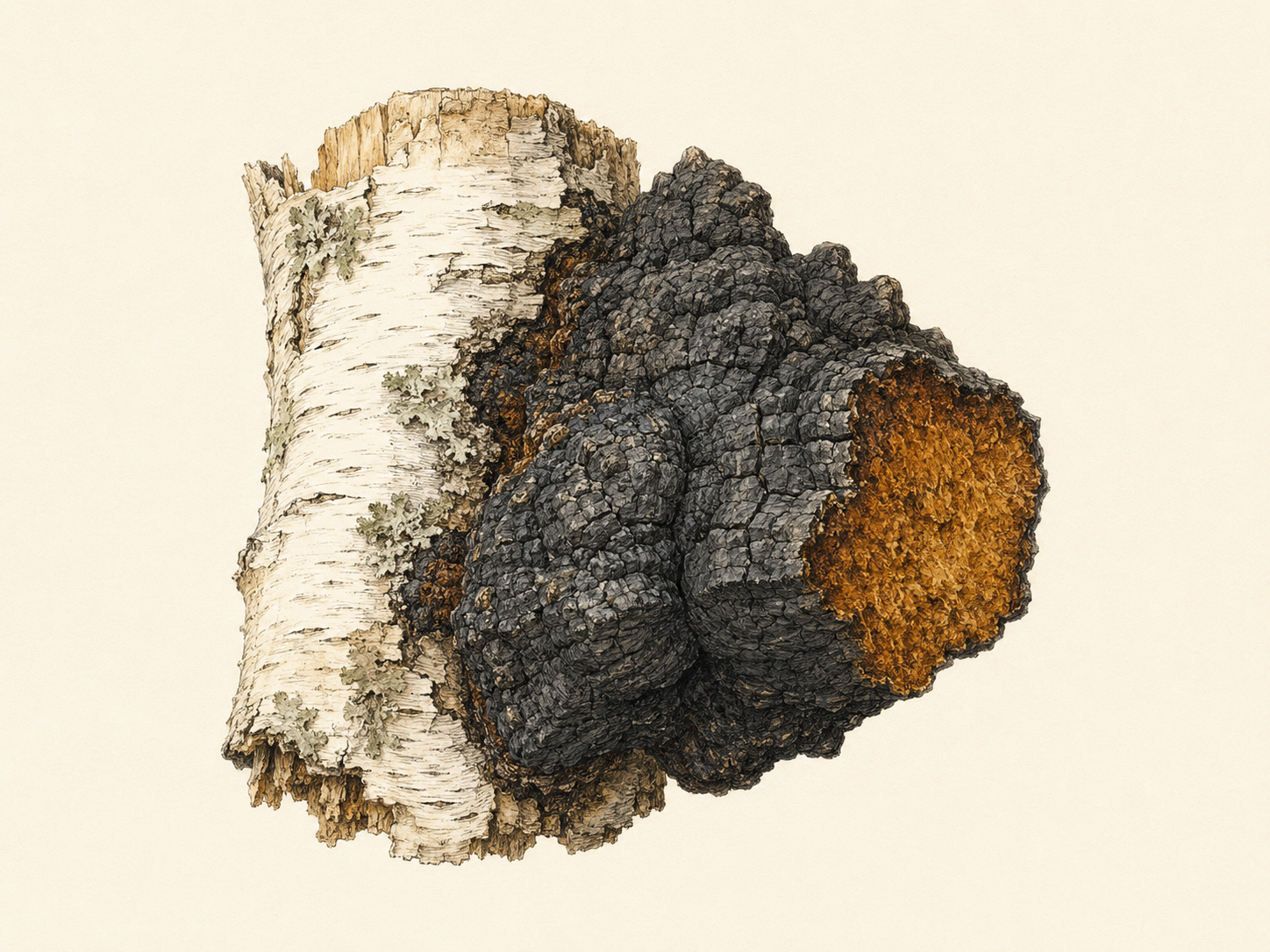
Chaga looks like a blackened mass rather than a typical mushroom cap. Its slow wild growth raises sustainability questions, and a package of brown powder cannot be reliably identified by sight alone.
“Functional mushroom” is a wellness category, not a regulatory standard. A product can use the phrase without proving identity, composition, safety, or benefit. Start with the Latin name and the actual material, not the promise on the front.
03
What the research suggests
Human evidence: insufficientAntioxidant, immune, glucose, and anticancer claims are mostly based on preclinical experiments. These do not establish that chaga drinks or supplements improve health in people.
The composition varies with tree, region, harvest, extraction, and contamination. A high laboratory antioxidant score is not proof of a clinical outcome.
Because benefits are uncertain and kidney risk is documented in case reports, more is not better.
04
How people take it and dosage context
Chaga is sold as tea chunks, powder, and extract. There is no established clinical dose. Avoid high-dose or prolonged use, particularly with kidney disease, kidney-stone history, or other oxalate sources.
| Format | What to check | Limit |
|---|---|---|
| Whole powder | Species, mushroom part, serving, starch and beta-glucans | Less concentrated; composition still varies. |
| Extract | Solvent, ratio, final beta-glucans or marker compounds | An extract ratio alone does not show quality. |
| Tincture | Species, solvent, concentration, serving | Alcohol and water capture different compounds; drops are not standardized. |
| Blend | Amount of every species | A large blend can hide very small individual amounts. |
05
Side effects and who should be cautious
Chaga can contain substantial oxalate. Kidney injury reports, possible bleeding effects, and possible glucose effects warrant caution. It may be unsuitable with anticoagulant or diabetes medication and before surgery.
Dietary supplements are not reviewed like prescription drugs before sale. “Natural” does not mean interaction-free. Bring the label and, if available, a current certificate of analysis when asking a clinician or pharmacist.
06
What to look for when buying
- Species identity is independently checked
- Oxalate information is available
- Birch source and sustainable harvest are documented
- Heavy metals, microbes, and adulterants are tested
- The label avoids disease-treatment claims
Fruiting body vs. mycelium
Neither phrase wins automatically. They are different fungal materials with different compound profiles. A trustworthy company says what it used, whether grain or another substrate remains, how it extracted the material, and what the finished batch tested for.
Beta-glucans and testing
Measured beta-glucans are more useful than a broad total-polysaccharide claim, which may include starch. Look for a recent, lot-linked report covering identity, heavy metals, microbes, and relevant pesticides or adulterants.
FAQ
Common questions
Is chaga a mushroom?+
It is a fungus, but the harvested black conk is a sterile growth rather than the familiar cap-and-stem fruiting body.
Does chaga cure cancer?+
No. Cell and animal findings do not show that chaga treats cancer in people, and it should not replace oncology care.
Can chaga affect the kidneys?+
Yes. High oxalate exposure from chaga has been linked in case reports to serious kidney injury.
Sources